How to Organize an Emergency Document Folder You Can Actually Use
Create a practical household document index, protect sensitive copies and test whether you can retrieve the information you need during disruption.
An emergency document folder is useful when it helps you find information under pressure. It does not need to contain every paper your household has ever received. Start with a clear index, choose secure places for the records that matter and check whether an authorised person can retrieve them when ordinary routines are disrupted.
Begin with questions rather than a scanner
Ask what information you might need if you had to leave home, contact an insurer or establish which account or service to call. FEMA’s Emergency Financial First Aid Kit provides a structured way to think about household identification, financial records, insurance and other important documents. Use it as a checklist to adapt, rather than copying every category without considering your situation.
Local requirements differ. A US checklist is a planning aid, not a statement that a particular copy will be accepted by an authority in another country. Keep originals where they belong and check the requirements of the organisation that would receive a document. A scan does not automatically replace an original or a certified copy.
Make an index that reveals locations
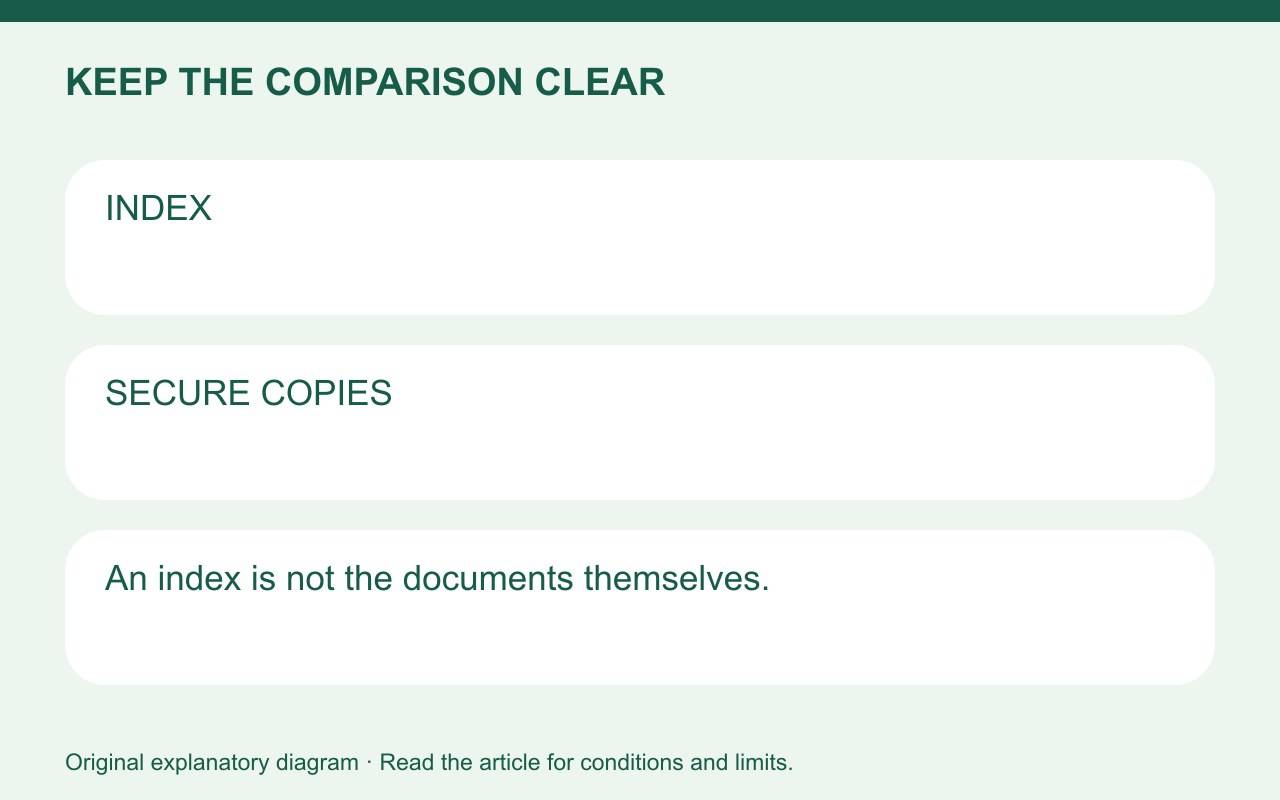
Create a short list with a document category, its storage location and who is authorised to access it. Avoid putting passwords or full identity numbers in an ordinary unprotected index. It should help you find a record without creating a second collection of exposed sensitive information.
| Category | What the index should help answer |
|---|---|
| Identification | Where are the relevant originals and appropriate copies? |
| Insurance | Which current policy applies and how can the insurer be contacted? |
| Household services | Where is the current provider information? |
| Important legal records | Where are the originals and whom should an authorised person contact? |
Use plain labels. A folder called “latest final important stuff” becomes less useful with each revision. Choose names another authorised household member can understand, and include a date so an old document is not mistaken for the current one.
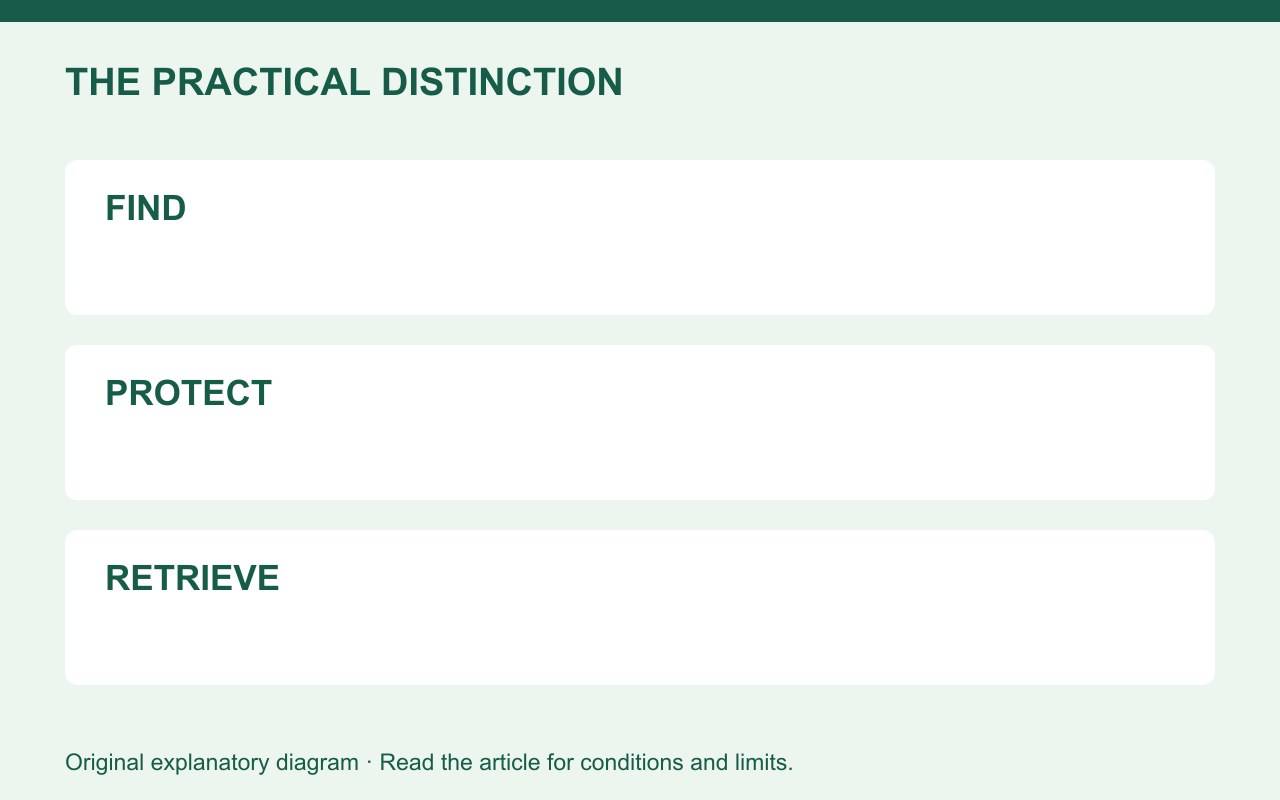
Protect copies without making them unreachable
The Ready.gov checklist encourages making and storing copies of important records. Security and access belong in the same decision. A copy that can be found by anyone is exposed; a copy that nobody authorised can open during disruption is impractical. Choose a method appropriate to the sensitivity of the information and your household’s circumstances.
For digital records, use the security features and recovery arrangements of the storage system you choose. Do not email a complete identity-and-finance bundle to a casually shared inbox as a shortcut. For physical copies, think about protection from ordinary damage as well as unauthorised access. Ask a qualified professional when the record has legal or specialist storage requirements.
Test retrieval with a harmless example
Choose a non-sensitive sample document and ask an authorised household member to find it using the index. This is an original planning exercise, not a test recommended for exposing real account records. Notice whether the labels, locations and access instructions are clear. If the person needs you to explain every step, improve the index before adding more documents.
Consider a second situation: your phone is unavailable. Can you still find an essential contact number or the location of the folder? Our explanation of phone-photo backups distinguishes a convenient device copy from a recoverable backup. Apply that same retrieval question to records, with stronger privacy precautions where their content requires it.
Review when the information changes
Update the folder when a policy renews, a provider changes or a household circumstance makes the index inaccurate. Remove obsolete duplicates through an appropriate secure process rather than leaving several conflicting versions with equally plausible names. Avoid deleting an original merely because a scan appears to open correctly.
Keep the maintenance task small: check one category, confirm its current record and verify the location in the index. The aim is dependable retrieval, not an impressive number of scanned pages. A modest folder with clear ownership and current information can be more usable than a large archive that nobody has practised finding.