How to Organize a Refrigerator Around Food Safety
Organize refrigerator shelves around safe temperatures, separation and clear labels. Build a useful use-first area without confusing neat storage with food safety.
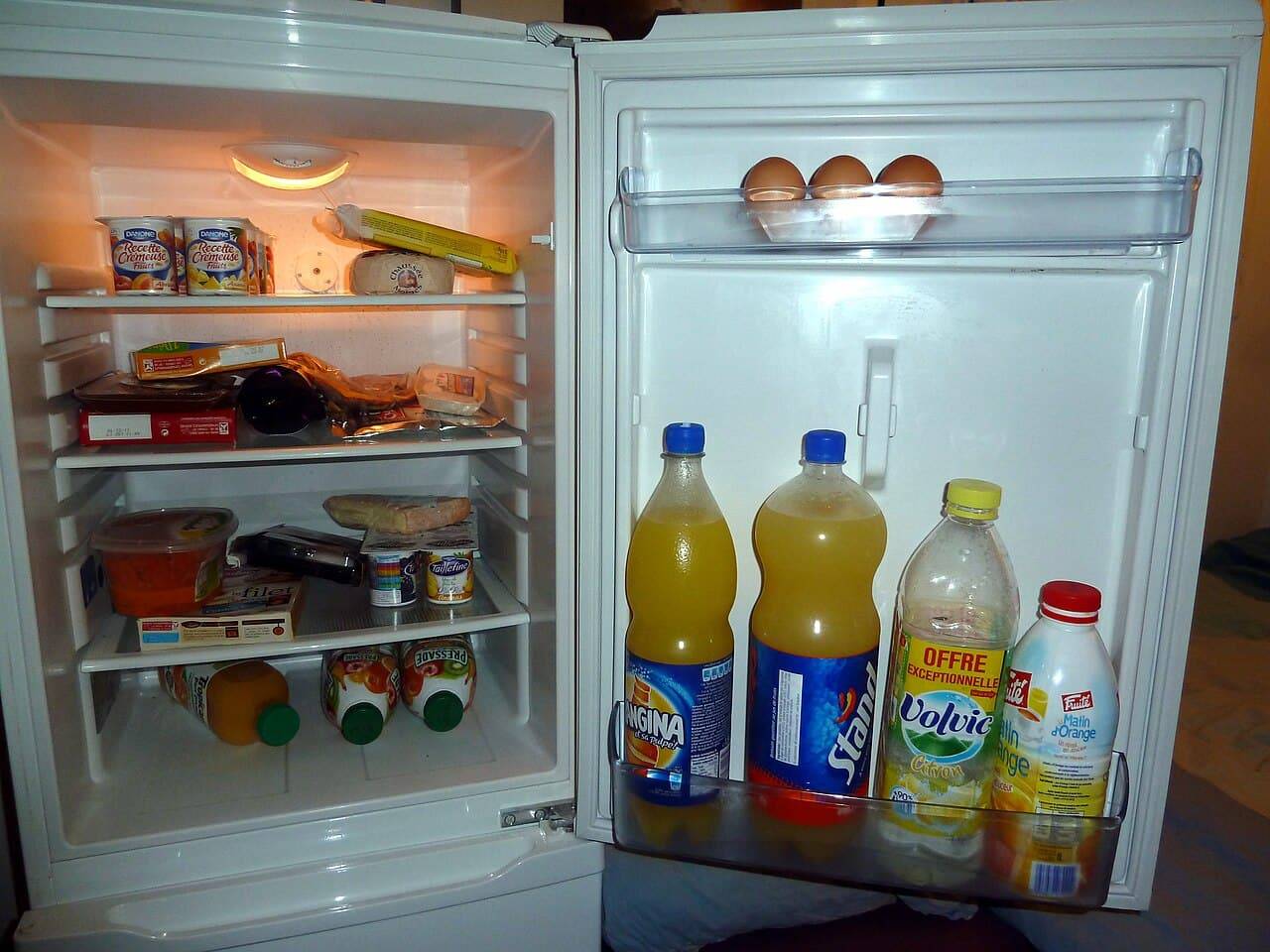
A refrigerator can look tidy and still be difficult to use safely. Matching containers do not tell you whether food is cold enough, when leftovers were prepared or whether a raw-meat package is leaking. A better organizing plan begins with temperature and separation, then makes ordinary decisions easier. You should be able to see what a container holds, know what needs using and retrieve it without disturbing everything around it.
Check the temperature before rearranging
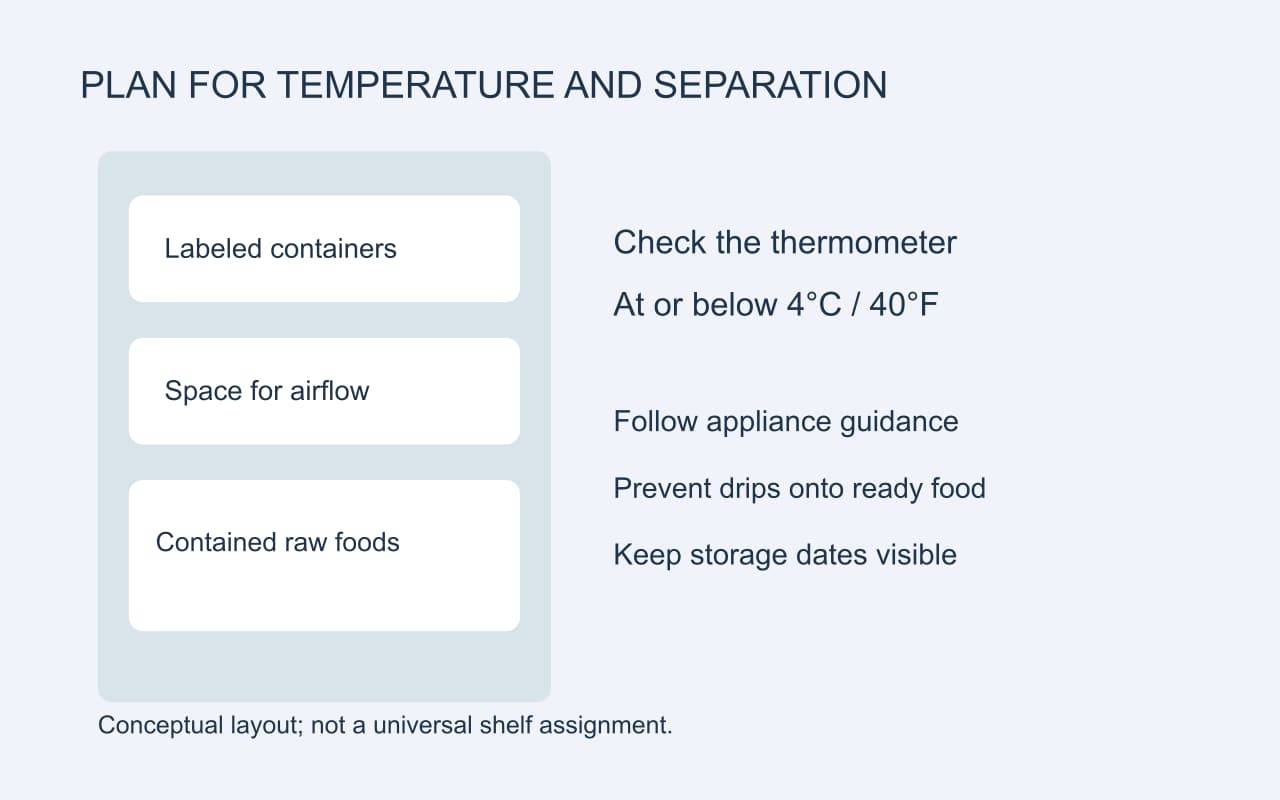
Use an appliance thermometer rather than judging coldness by touch. The FDA recommends keeping a refrigerator at or below 40°F, or 4°C. Follow the appliance's instructions for placement and adjustment, and check the reading periodically. A control dial marked with numbers may not display the actual temperature inside the compartment.
If the temperature is wrong, investigate that before treating organization as the solution. Check the appliance manual and seek service when needed. Moving food into attractive bins cannot compensate for an appliance that is not maintaining a safe temperature. Keep the door open only as long as necessary while checking and reorganizing.
Clear one area at a time
Avoid unloading every perishable item onto the counter for a long sorting session. Work in small sections and keep food appropriately cold. Deal with spills using the appliance manufacturer's cleaning instructions. Remove ordinary clutter such as empty packages and identify anything whose history or storage conditions make it unsafe to keep.
Do not taste food to decide whether it is safe. Harmful contamination does not always announce itself through an unpleasant smell or obvious appearance. If a container has no label and no one can establish what it is or how long it has been stored, a more attractive shelf will not resolve that uncertainty.
Separate raw foods from ready-to-eat foods
Arrange raw meat, poultry and seafood so their juices cannot drip onto foods eaten without further cooking. Use intact, suitable containers or trays and a position that prevents contamination of other shelves. Check the appliance's designated compartments and instructions. Do not assume a thin retail wrapper is a reliable leakproof container.
This separation should remain easy to maintain after a grocery shop. Leave a realistic place for raw ingredients instead of filling every available surface with ready-to-eat snacks. If a household member has to balance a raw package above an open salad bowl to make it fit, the organizing plan needs more space or fewer items.
Create a clearly defined use-first area
Choose a visible area for foods that need attention soon, provided their storage requirements fit that location. It might hold a labeled portion of cooked food, an opened product or produce planned for the next meal. The category means check and use appropriately, not that everything in the area is safe indefinitely.
Keep the system small. A large bin containing ten unrelated containers can hide food as effectively as the back of a shelf. Arrange labels toward the front and avoid stacking so high that the bottom items disappear. If moving an item into the area, confirm its date and storage instructions rather than assigning a fresh start date.
Label leftovers with useful information
Write the food name and preparation date on a label that stays readable under refrigeration. If needed, add a brief note about an ingredient important to the household. Avoid relying on a lid color or a memory of which dinner produced the container. Clear labels are particularly useful when several people cook or pack lunches.
Use an authoritative storage chart for the specific food rather than one universal deadline. The FoodSafety.gov chart lists three to four refrigerated days for many cooked leftovers, while other foods have different limits. A label records information; it does not extend a food's safe storage time or make up for improper handling before refrigeration.
Leave room for air and access
Do not pack the refrigerator so tightly that air cannot circulate. Respect vents, drawers and shelf limits specified by the maker. An organizer is helpful only if it improves access without obstructing the appliance's operation. Check that the door closes fully after any change in shelf height or container placement.
Store items according to their instructions rather than arranging everything purely by appearance. The door is not automatically the best location for any product that fits neatly there. For example, FDA guidance recommends keeping eggs in their carton inside the refrigerator rather than on its warmer door. Use your appliance guidance alongside product labels.
Make the weekly check brief
Before shopping, inspect the use-first area, check labels and see what space is actually available. Plan around ingredients that can safely be used. A quick note of what is already present is often more valuable than buying another set of organizers. Clean spills promptly instead of waiting for a major scheduled clear-out.
Keep food-safety decisions separate from a determination to avoid waste at any cost. Freezing an item does not reverse unsafe storage. Nor does cooking automatically rescue every food that has been mishandled. If a storage question is uncertain, consult current official guidance for that food and situation.
A useful refrigerator system makes safe habits visible. Start with a reliable temperature, contain raw foods, label what you prepare and leave enough space to see what is there. The result may look less decorative than a photograph of identical jars, but it should make everyday meals and shopping decisions much easier.